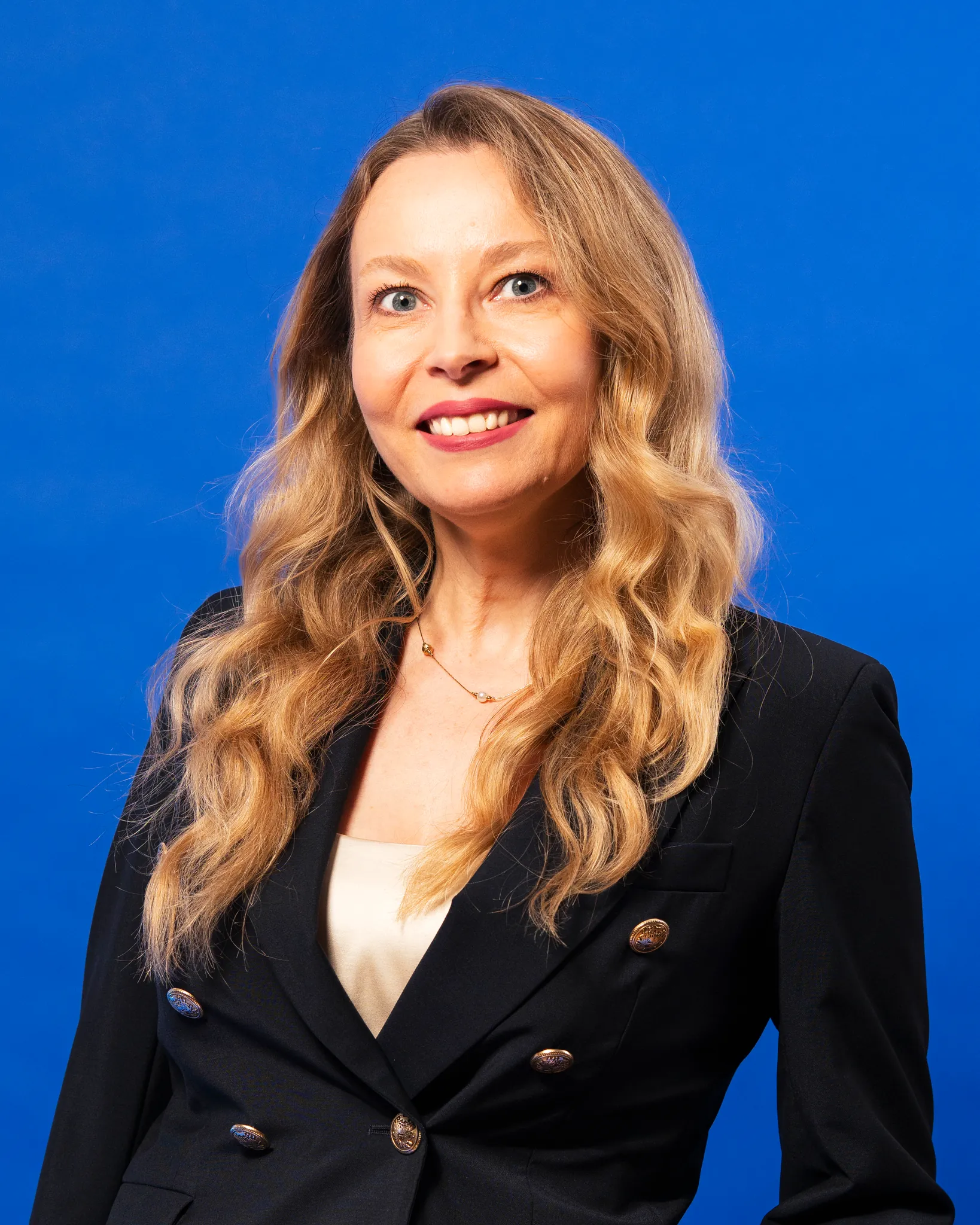
Mariola Bitner explains the difference between neurodiversity (the full spectrum of human neurology, which applies to everyone) and neurodivergence (people with ADHD, autistic people, people with dyslexia). She proposes three questions that build self-awareness at work: what triggers me, when do I work best, and what does professionalism mean to me. In recruitment, she advises simplifying application forms and sending candidates practical information, because under stress neurodivergent people can lose 30-50% of their potential.
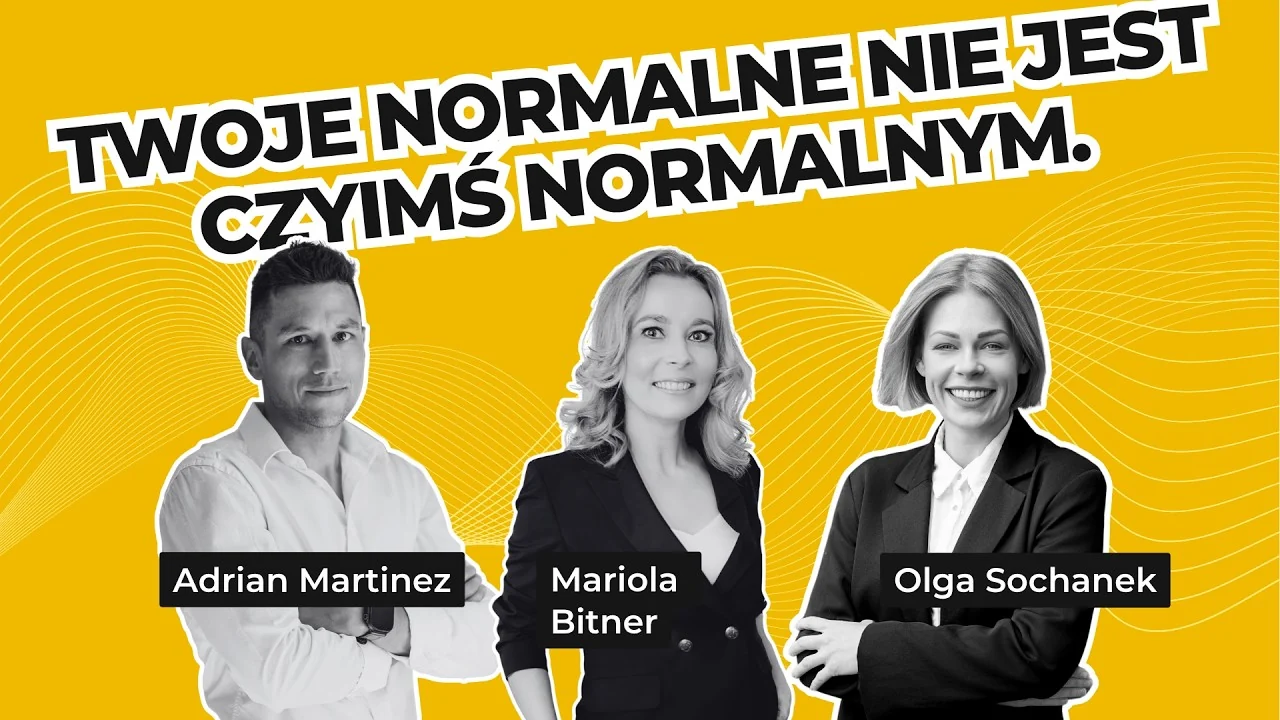
A conversation with Mariola Bitner about neurodiversity, neurodivergence and how to build self-awareness at work and beyond. Hosted by Adrian Martinez and Olga Sochanek. (The episode is in Polish.)
Watch the full conversation Full video interview · Brookfield Partners on YouTube WatchFrom definitions to self-awareness
Olga SochanekWe are going to talk about a topic that is very much in the spotlight right now. Neurodiversity is in headlines everywhere and there is a lot of talk about it - but I would like us to start by getting the terminology right. In one of our earlier conversations, my whole view of this subject changed, and you showed me how often these terms are confused. What is the difference between neurodiversity and neurodivergence?
Mariola BitnerIt is an important distinction. Neurodiversity describes the full spectrum of human neurology - it includes everyone, both neurotypical and neurodivergent people. The concept says that diversity in how brains work is natural and valuable. Neurodivergence, on the other hand, refers to specific people whose brains function in a way that differs significantly from the so-called norm - for example people with ADHD, autistic people, or people with dyslexia or dyspraxia. Treating the two terms as the same is one of the most common mistakes, and I wanted to make that clear.
Olga SochanekAnd when we talk about these differences, is it an illness or a disorder? That makes a big difference to how people perceive it.
Mariola BitnerIt is not an illness - because an illness is something we treat, something with a specific biological basis that can be eliminated. ADHD and autism fall under disorders, meaning they are a set of traits. The goal is not to cure the person but to make it easier for them to function in society. That can mean medication that supports concentration, physical adjustments to the workplace, psychological support - many different forms of help. But we are not fighting something that has to be eradicated.
Mariola BitnerIn Poland we only started talking openly about neurodiversity after 2020, roughly from 2022. There was a clear boom - you can see it in Google search trends. The English word “neurodivergent” has also entered our vocabulary. I use the Polish term “neuroatypowy” (neuroatypical) because it is more precise, but both are in use. What matters more is not confusing them with neurodiversity, which applies to all of us.
Three questions that will change your approach to work
Olga SochanekNow that we understand the definitions - where do we start building our own self-awareness? How do we recognise what we ourselves are dealing with?
Mariola BitnerBuilding self-awareness is the foundation - not only in the neuro context, but in general. I suggest starting with three questions. First: what triggers me, that is, what provokes strong reactions in me, positive and negative? Second: when do I work well, and in what conditions am I effective? And the third, which surprised even me: what does being professional at work mean to me? Because it often turns out that what we call professionalism is simply our own working style dressed up in formal language.
Olga SochanekSo a lesson about yourself - seen through the lens of work.
Mariola BitnerExactly. And you can extend it to your whole life. Observing through the senses also helps - sight, hearing, smell, touch. When you walk into a new space or a meeting, try to pause and feel how you are perceiving it. Then there is intuition, that sixth sense - you walk in somewhere and immediately know: this feels right, or something here is off.
Adrian MartinezI understand that very well. When I walk into a new space, I pick up the energy of the place, and it can either fire me up or completely throw me off - even when I am surrounded by great people. And I take it that this self-awareness is not a one-off exercise.
Mariola BitnerIt is an ongoing process. The answers to those three questions change over time - because we change. That is why it is important to return to them regularly. And to remember that responsibility for communication lies with both sides. We cannot assume that others will guess our needs. If I know I am about to reach my emotional limit, I can leave the meeting and say plainly: I need to cool down, because right now our conversation will not be constructive. That is not weakness - it is maturity.
Barrier-free recruitment: what to do differently?
Adrian MartinezLet us move on to recruitment. What should a job interview that takes neurodiversity into account look like?
Mariola BitnerLet us start before the interview. Application forms are often chaotic - long, full of jargon, with questions nobody can understand. Even the font matters. If a form looks like a jumble of boxes that require logging in, where the candidate has to create a separate account with every company, that is a barrier from the outset, especially for neurodivergent people.
Mariola BitnerResearch shows that neurodivergent people can lose 30 to 50 per cent of their potential in stressful situations - and a job interview is exactly that kind of situation. A new place, new people, unfamiliar questions. That is why something as simple as sending the candidate a detailed map, with information on which bus to take and which entrance to wait at, can genuinely reduce anxiety and let them show what they are really capable of. You do it once, and the effect is huge.
Adrian MartinezAnd what about the interview itself? When should a candidate talk about their needs - and should they at all?
Mariola BitnerIt depends on the company and the situation. More and more young people say it outright during recruitment: I have ADHD, I am autistic. And that is brave and wonderful. But it is worth checking beforehand whether the company is ready for it - whether it speaks publicly about inclusion and neurodiversity. If it does, we can be more open about our needs. If not, it is better to focus on specifics: I need quiet to work, I need flexible hours. No labels. Saying “I have ADHD” to a recruiter who does not understand the subject often means next to nothing - because most people still picture a child running around a classroom.
Olga SochanekAnd if you are in a difficult situation - you have no job and the financial pressure is high - how much honesty can you afford?
Mariola BitnerThat is a real tension, and I will not pretend it does not exist. If you have a job and are looking for something better, you have the comfort of negotiating terms from the start. If you are out of work, under time and financial pressure, you have to judge what is absolutely critical for you. If an open-plan office is a non-starter for you, say so. The rest you can build gradually once you have joined the company, by talking to your manager and your team.
How to design an office that works for everyone?
Olga SochanekLet us talk about space. What should an office that takes neurodivergent people into account look like?
Mariola BitnerIn my research on spaces for neurodivergent people, sound, meaning acoustics, came first. Second was the spatial layout of the office. Third was smell. That is not intuitive, but it is very important. The interview room should be a secluded room, away from noisy areas. Ideally with different types of seating, a round table instead of a square or rectangular one, warm colours and adjustable lighting.
Adrian MartinezAnd temperature? That must be one of the biggest sources of conflict in offices.
Mariola BitnerTemperature is a topic for a separate episode - seriously. In the meantime, a more important principle: we should design offices not around specific people, but around different modes of work and different moments in the day. Sometimes we need focus and quiet, at other times collaboration and energy. That is why an office with varied zones - quiet, semi-open and lively - is the best solution for everyone, not only for neurodivergent people. And let us remember: in the wrong space we can lose up to 50 per cent of our potential. That is not a small number.
The manager, the team and conflict
Adrian MartinezLet us assume an employee said nothing during recruitment. Once they have joined the company, who should start the conversation about their needs? The employee or the manager?
Mariola BitnerBoth. Responsibility for communication never lies with one side only. The manager should create an atmosphere of safety in which people can talk about their needs. And the employee should make use of that openness rather than waiting for the manager to guess. It is also important that the manager may be neurodivergent too - and then they need the same understanding as anyone else.
Olga SochanekWe train managers in how to deal with a difficult team. But nobody teaches people how to deal with a difficult manager.
Mariola BitnerThat is a very astute observation. A manager is an employee too. They can also have bad days, poor communication habits and unconscious biases. Instead of training on “how to manage difficult people”, we need an approach built around how to communicate and work together - regardless of role. A “difficult person” is often the result of a team that could not be bothered to stop and understand why that person behaves the way they do.
Adrian MartinezI have a specific scenario in mind: I have a 50-year-old and a 25-year-old in my team, both neurodivergent, with different communication styles, from different generations - and there is a conflict between them. What do I do?
Mariola BitnerFirst of all, I do not put them straight into one meeting and tell them to talk. I start by talking to each of them separately - looking for what connects them: a shared goal, a shared value. Then I organise a moderated meeting, focused not on mutual accusations but on that shared goal. The generational divide is often a myth - working style and attitude matter more than age. I had two people in my team: one went into every detail and polished reports down to the last comma; the other thought strategically and kept an eye on deadlines. A potential conflict - but once they understood their different ways of working, they became a great duo.
Where is the line?
Olga SochanekThis is the question that has been on my mind throughout the conversation: where is the line? A good example is being late. People with ADHD are often structurally late - it is not disrespect, it is how their brain works. But at the same time it irritates others. When can you say “sorry, I have ADHD”, and when do you have to tell yourself “I need to work on this”?
Mariola BitnerThe line is different for everyone, and it is set by two things: the willingness of both sides and the impact on others. If someone knows they are late but does nothing to change it, that is a problem. If they are actively trying - setting two alarms, leaving earlier, asking for a reminder - that is a completely different situation. Knowing that someone is making an effort makes it easier for us to let it go. It is more about effort on both sides than about perfection.
Mariola BitnerAnd we cannot wait for the world to adapt to us - because that will not happen. But nor can we demand that someone crosses a line beyond which they will simply “crash” afterwards - that is, pay emotionally in the evening for everything they had to suppress all day. The key is communication. Instead of judging, ask: what can I do for you? Or shall we plan together how to handle this? It is not rocket science, but it changes a great deal.
Finally: reading and resources
Adrian MartinezWhat would you recommend to people who want to explore this topic further?
Mariola BitnerAbove all - check your sources. TikTok and Instagram can be a source of inspiration, but not a knowledge base. Look for material written by specialists and resources published on the websites of organisations working in this field. I highly recommend the British foundation Neurodiversity in Business - it brings together companies that are genuinely changing their working environments with neurodiversity in mind. It is worth visiting their website and seeing who works with them. I volunteered there myself for a while.
Mariola BitnerAs for books, I recommend looking at ADHD through the lens of strengths, not only difficulties. There is a lovely exercise in reframing: instead of saying someone is “a bit scatterbrained”, you can say they are curious about the world. Instead of “impulsive”, creative. Instead of “their results are uneven”, they have flashes of genius. The same person, different words, a different approach.
5 key takeaways from the conversation
- Neurodiversity is not the same as neurodivergence - the first applies to all of us, the second to specific people. And it is not an illness to be “cured”, but a set of traits where the aim is to make functioning easier.
- Self-awareness starts with three questions: what triggers me, when do I work best, and what does professionalism mean to me. It is an ongoing process, and responsibility for communication lies with both sides.
- In recruitment, stress can take away 30-50% of a person's potential. Simple things - a clear application form, a map with travel directions, a quiet room - genuinely reduce anxiety. Talk about specific needs, not necessarily about labels.
- We design offices around different modes of work, not around specific people. Quiet, semi-open and lively zones serve everyone - in the wrong space we lose as much as 50% of our potential.
- A “difficult person” is often the result of misunderstanding. Instead of judging, ask “what can I do for you?”. The line is set by the effort of both sides and the impact on others - what counts is effort, not perfection.
Mariola Bitner is an expert in neurodiversity in the workplace and runs workshops for companies. Adrian Martinez and Olga Sochanek host the Brookfield Partners podcast about work and office space.